
Up to 80% of runners get injured every year, but most injuries are preventable. The biggest causes are training load errors, weakness in key muscle groups, and poor running mechanics. With targeted physiotherapy for runners in Mississauga, you can fix the root cause, rebuild resilience, and return to running stronger than before, often without stopping your training completely.
Why Runners Get Hurt and What to Do About It
Running is simple. Until it is not. One day you are knocking out kilometres feeling strong. The next, there is a twinge in your knee at the 5K mark that gets worse with every run, or your shin starts aching two weeks into a half-marathon training block. Running injuries are incredibly common, with some estimates suggesting that up to 80% of runners deal with an injury each year. But common does not mean inevitable. A landmark epidemiological study published in the British Journal of Sports Medicine confirmed that training load errors are the single biggest driver of running injuries, accounting for up to 60% of cases. Most running injuries are preventable, and the ones that happen can be treated effectively with the right running injury physio Mississauga approach.
Why Runners Get Hurt: The Most Common Causes
Running is repetitive. Your foot hits the ground roughly 1,500 times per kilometre, absorbing forces of two to three times your body weight with each step. That is a significant cumulative load, and when something in the chain is not handling it well, the stress accumulates until something gives. Our Axis Mississauga clinic team sees these four contributors in the vast majority of running injury cases:
Training Load Errors
Ramping up mileage too fast, adding speed work too soon, or not building in enough recovery days. Your muscles, tendons, and bones need time to adapt to increased demands. Push too hard, too fast, and they break down. This is the most preventable cause of running injuries.
Weakness in Key Areas
Runners tend to run and skip the strength work. But your glutes, hips, and calves are the engine that drives your running mechanics. When they are weak, other structures compensate and eventually get overloaded. Physiotherapy for runners in Mississauga always includes a strength assessment to identify these gaps.
Poor Running Mechanics
Overstriding, excessive heel striking, hip drop, and trunk rotation are common biomechanical issues that add up over thousands of steps. You do not always need to change your form completely, but identifying problematic patterns is often the missing piece in resolving chronic running knee pain treatment Mississauga patients need.
Ignoring Early Warning Signs
That minor ache that only shows up in the first kilometre and then disappears is your body communicating. Runners are skilled at pushing through discomfort, but there is a meaningful difference between training fatigue and a signal that something is not right.
Common Running Injuries and What to Do About Them
Understanding the specific injury helps set the right treatment path. Here is what we see most often at our Mississauga physiotherapy clinic.
Runner’s Knee (Patellofemoral Pain)
Pain around or behind the kneecap, usually worse with stairs, hills, or prolonged sitting. This is rarely a knee problem alone. Hip weakness and quad imbalances are almost always involved. Running knee pain treatment Mississauga focuses on strengthening the hip and quad while managing training load intelligently.
Achilles Tendinopathy
Pain and stiffness in the Achilles tendon, often worse in the morning or at the start of a run. Tendons need progressive loading to heal. Rest alone will not fix this condition. A structured eccentric and heavy-slow resistance program is the evidence-based standard of care.
Shin Splints (Medial Tibial Stress Syndrome)
Pain along the inside of the shinbone, usually from ramping up mileage or switching running surfaces. This requires load management, calf strengthening, and sometimes a review of footwear. Left untreated, it can progress to a stress fracture.
Plantar Fasciitis
That stabbing pain in the bottom of your heel, especially with your first steps in the morning. Strengthening the foot and calf, managing load, and addressing stiffness in the ankle and big toe are the primary treatment levers.
IT Band Syndrome
Sharp pain on the outside of the knee, usually kicking in at a consistent point in your run. Hip strengthening, particularly the gluteus medius, and load management are the primary treatments. Foam rolling the IT band itself is rarely the solution.
Hip Flexor and Hamstring Strains
Common in runners who add speed work or hills without adequate preparation. These respond well to progressive loading and addressing the flexibility or strength deficits that set them up.
How Running Injury Physio Mississauga at Axis Helps You Stay on the Road
At Axis, we do not just treat the injury. We identify why it happened and build a body that is more resilient to future problems. Our physiotherapy services for runners follow a comprehensive, runner-specific framework.
Running-Specific Assessment
We look at your movement, strength, mobility, and training program. We want to understand how you run, how you train, and what your goals are. A marathon runner and a casual 5K jogger have different demands, and their treatment should reflect that.
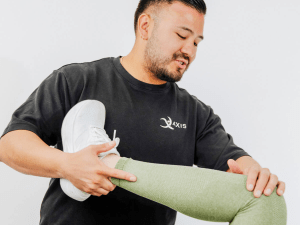
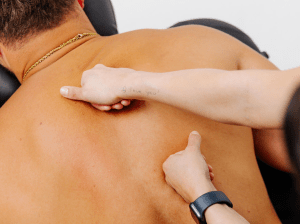
Targeted Hands-On Treatment
Manual therapy, dry needling and acupuncture, and joint mobilization reduce pain and restore function. This creates the window for rehab to do its work. Our chiropractic care team can address joint-specific restrictions in the hip, pelvis, or lumbar spine that contribute to altered running mechanics.
Strength Programming
Every runner needs a strength program. We prescribe targeted exercises for the specific weak links in your chain, whether that is your glutes, calves, feet, or core. These are not bodybuilding workouts. They are focused, efficient routines designed to make you a more durable runner.
Load Management Guidance
Sometimes the fix is not a new exercise. It is adjusting your training plan. We help you understand how to progress mileage, intensity, and frequency in a way that respects your body’s capacity to adapt.
Return-to-Running Planning
If you have been sidelined, we build a structured return-to-running plan with clear milestones. Not just start running again when it feels okay, but a progressive plan that gets you back to your target distance and pace safely.
Massage Therapy Support
Our sports massage therapy team works alongside your physiotherapy plan to reduce muscle tension, support tissue recovery, and help you manage the demands of training. Our registered massage therapists specialize in the muscle groups most relevant to runners, including the calves, glutes, hamstrings, and hip flexors.
What the Evidence Says About Running Injury Rehabilitation
Evidence reviewed by Physiopedia and published in the British Journal of Sports Medicine consistently supports structured, progressive physiotherapy as more effective than passive rest for the majority of running injuries. The Canadian Physiotherapy Association provides evidence-based clinical guidance on musculoskeletal care for active populations, including runners. The Ontario Physiotherapy Association supports direct-access physiotherapy across Ontario, meaning you can book running injury physio Mississauga at Axis without waiting for a physician referral.
Running Physio in Mississauga at Axis
Our Mississauga location at 60 Bristol Rd E #604 is built for active people, and we work with a lot of runners. Whether you are training for a marathon, building up to your first 10K, or just running to stay healthy, our team understands what runners need and what they want: to keep moving.
We understand the runner’s mindset. You do not want to stop. And in many cases, you do not have to. We often modify training rather than shut it down completely, keeping you active while we address the issue. The goal is always to keep you moving forward.
Stop Losing Kilometres to an Injury That Is Treatable
Every week you spend sidelined, managing pain instead of training, or guessing at what the problem is, is a week you could have spent running. Most running injuries respond well to the right treatment, and the sooner you start, the faster you return.
At Axis Therapy and Performance in Mississauga, we assess your movement, identify the real cause of the problem, and build a plan that gets you back to training, often without stopping your runs completely. Explore our full range of services or find an Axis clinic near you on our locations page, with clinics across Markham, Scarborough, Riverdale, Downtown, and Mimico. Book your appointment at Axis Therapy and Performance at 60 Bristol Rd E #604 and get back on the road running stronger and more confidently than before.
Frequently Asked Questions
1. Should I stop running completely when I have a running injury?
Not necessarily. In most cases, complete rest is not required and can slow your recovery. Your physiotherapist will assess your injury and recommend modified training that keeps you moving safely while allowing healing to occur. Staying active is almost always better than stopping entirely.
2. How do I know if my running pain needs physio or just rest?
If pain persists for more than five to seven days, worsens during your run, or causes you to alter your gait, it is time to see a physiotherapist. Pain that resolves quickly and does not affect your mechanics is usually safe to monitor. When in doubt, an assessment takes the guesswork out.
3. What is a return-to-running plan and do I need one?
A return-to-running plan is a structured, progressive program that gradually reintroduces running volume and intensity after injury. It includes clear milestones and criteria to progress safely. If you have been sidelined for more than two weeks, a structured plan significantly reduces your risk of re-injury compared to jumping back into full training.
4. Can physiotherapy help me run faster and more efficiently?
Absolutely. Beyond injury treatment, physiotherapy for runners in Mississauga can identify biomechanical inefficiencies, strength deficits, and mobility restrictions that limit your performance. Many runners at Axis come in not because they are injured, but because they want to run better and reduce their injury risk going forward.
5. Do I need a referral to see a physiotherapist in Mississauga?
No. In Ontario, you can book directly with a registered physiotherapist without a doctor’s referral. Some extended health insurance plans may require a referral for reimbursement, so it is worth checking your policy. The Axis front desk team can help you navigate insurance questions.
Book Your Running Injury Assessment at Axis Mississauga
Physiotherapy for runners in Mississauga at Axis is built to find the real cause of your running injury and address it with a plan that keeps you as active as possible throughout your recovery. Book your assessment at 60 Bristol Rd E #604 and get back on the road running stronger and more confidently than before.
Key Takeaways
- Up to 80% of runners experience an injury each year, but the majority are caused by preventable factors: too much mileage too soon, skipping strength work, or ignoring early warning signs.
- Most running injuries do not require complete rest. Modified training keeps you moving and supports recovery better than stopping altogether.
- The most common running injuries, including runner’s knee, Achilles tendinopathy, shin splints, and plantar fasciitis, all respond well to running injury physio Mississauga when treated early and correctly.
- Strength training is not optional for runners. Weak glutes, hips, and calves are a primary driver of overload injuries and poor running mechanics.
- A structured return-to-running plan with clear milestones significantly reduces re-injury risk compared to resuming training when it feels okay.
- At Axis Mississauga, treatment plans for physiotherapy for runners in Mississauga are built around your training program and race goals, not just the injury in isolation.