
The shoulder is the most mobile joint in the body, and that mobility makes it uniquely dependent on muscular stability. Physio for shoulder pain in Markham at Axis restores that stability through targeted rotator cuff and scapular strengthening, so the pain does not come back after treatment ends.
What Shoulder Pain Physiotherapy in Markham Does
Shoulder pain in Markham rarely resolves on its own because the shoulder depends on muscular stability more than any other joint in the body. Without addressing those muscles directly, the underlying dysfunction persists. Our Axis Markham clinic delivers shoulder pain physiotherapy that combines thorough assessment, skilled manual therapy, and progressive rotator cuff and scapular strengthening to restore full, confident shoulder function. Whether the issue is impingement, tendinopathy, a frozen shoulder, or a post-surgical recovery, the approach is precise and the goal is complete restoration.
Why Shoulders Are Different From Other Joints
The shoulder is the most mobile joint in the human body. It operates in every plane of movement, overhead, behind the back, across the body, and that range is what makes it essential for sport, training, and daily life.
That mobility comes at a structural cost: the shoulder socket is deliberately shallow, sacrificing bony stability for movement freedom. The joint depends almost entirely on the rotator cuff muscles, scapular stabilizers, and surrounding soft tissue to keep the humeral head centred during movement.
When those muscles are weak, fatigued, or injured, the shoulder does not track properly. This is why a specialized shoulder injury treatment in Markham that targets the musculature, not just the painful area, produces lasting results.
What Is Actually Causing Your Shoulder Pain
Rotator Cuff Pathology
Strains, partial tears, and tendinopathy affecting the four rotator cuff muscles are among the most common presentations. Overhead athletes, lifters, swimmers, racquet sport players, and adults over 40 are all regularly affected. According to OrthoInfo (AAOS), most rotator cuff conditions respond well to targeted physiotherapy without requiring surgery.
Impingement Syndrome
The pinching or catching sensation when raising the arm between approximately 60 and 120 degrees. Caused by compression of soft tissue in the subacromial space, typically from rotator cuff weakness, poor scapular mechanics, or thoracic spine stiffness. Physiopedia outlines assessment and treatment approaches for impingement that align with our Axis Markham approach.
Frozen Shoulder (Adhesive Capsulitis)
A condition characterized by progressive capsular thickening and stiffness, often without a clear precipitating event. Follows a predictable freezing, frozen, and thawing progression. The Canadian Orthopaedic Association provides patient resources on adhesive capsulitis stages and management. Shoulder pain physiotherapy in Markham plays a critical role in symptom management and mobility restoration through each phase.
Labral Tears
The labrum deepens the shoulder socket and contributes to joint stability. Tears from falls, dislocations, or repetitive overhead loading cause catching, clicking, and instability sensations. Many labral injuries are managed effectively with physiotherapy.
AC Joint Injuries
Acromioclavicular joint separations from falls, direct contact in sports, or cycling accidents. The characteristic prominence on the top of the shoulder is a common presenting feature. Most AC joint injuries recover well with structured physiotherapy.
Cervical Spine Referred Pain
Not all shoulder pain originates in the shoulder. Stiff or irritated cervical segments refer pain into the shoulder, upper arm, and hand. A thorough shoulder pain physiotherapy assessment in Markham identifies cervicogenic contributions early.
How Axis Approaches Shoulder Pain Physiotherapy in Markham
Thorough Assessment
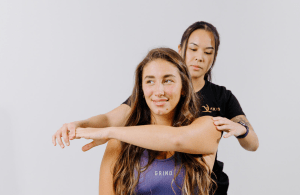
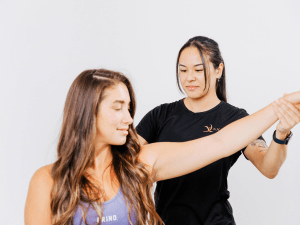
Range of motion in every plane, rotator cuff strength testing, scapular control evaluation, thoracic spine mobility, and cervical spine screening. Movement is observed under load: pushing, pulling, reaching, rotating. This gives a complete picture of where dysfunction exists and what is driving symptoms.
Skilled Manual Therapy
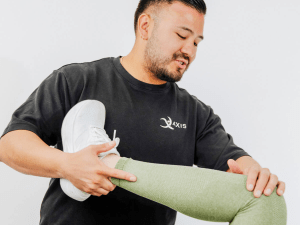
Joint mobilizations restore movement in restricted segments of the shoulder and thoracic spine. Soft tissue work addresses muscles that are overactive or guarding. Our acupuncture team can complement this with dry needling that targets deep trigger points referring into the shoulder and arm. These techniques reduce pain and restore mobility so active rehabilitation can begin at the right load.
Progressive Rotator Cuff and Scapular Strengthening
This is the foundation of lasting shoulder recovery. Exercises are prescribed based on assessment findings, starting at the patient’s current capacity, whether that is bands and bodyweight or loaded overhead movements, and progressively advanced toward the functional demands of their sport or daily life.
Movement Coaching
Shoulder mechanics during specific tasks, overhead pressing, throwing, pulling, swimming strokes, are assessed and retrained where compensatory patterns are present. Correct movement under load protects the shoulder and improves performance simultaneously.
Supporting Shoulder Recovery With Massage
Our massage therapy team provides targeted soft tissue work that supports shoulder rehabilitation, helping reduce tension in the muscles surrounding the joint and supporting faster recovery between sessions.
Shoulder Pain and Sleep Quality
One of the most overlooked effects of shoulder conditions is their impact on sleep. Rolling onto a painful shoulder repeatedly through the night degrades recovery, increases pain sensitivity, and sustains the inflammation cycle. Resolving the shoulder does not just restore daytime function. It restores sleep quality. That secondary benefit is often what patients notice most in the early weeks of successful shoulder pain physiotherapy in Markham.
Axis Is Now Open in Markham
The Axis Markham clinic at 2880 Major Mackenzie Dr E, Unit 2, brings shoulder pain physiotherapy that matches the standard athletes and active adults have relied on across the GTA. Every therapist completes the Axis Basecamp three-month in-house training program. Physiotherapy, chiropractic, and massage are coordinated under one roof. You can also find all our Axis locations across the GTA, including Scarborough, Riverdale, Downtown, Mimico, and Mississauga.
Frequently Asked Questions
1. Can physiotherapy fix shoulder pain without surgery?
In many cases, yes. Rotator cuff tendinopathy, impingement syndrome, frozen shoulder, and many labral injuries respond well to shoulder pain physiotherapy in Markham without requiring surgical intervention. Even when surgery is eventually appropriate, physiotherapy before and after the procedure significantly improves outcomes.
2. How long does shoulder pain physiotherapy in Markham take?
Impingement and rotator cuff tendinopathy typically improve within six to ten sessions over six to eight weeks. Frozen shoulder follows a longer timeline aligned with its natural phases. Post-surgical shoulder rehabilitation for rotator cuff repairs generally spans four to six months. Your physiotherapist will outline realistic milestones after your initial assessment.
3. Do I need imaging before starting shoulder pain physiotherapy?
Not always. Many shoulder conditions are accurately assessed and effectively treated through clinical examination alone. If imaging is warranted based on your presentation, your physiotherapist will communicate this and help coordinate the appropriate referral or discuss findings if you already have them.
4. Can cervical spine problems cause shoulder pain?
Yes. Irritated or restricted segments in the cervical spine commonly refer to pain into the shoulder, upper arm, and hand, a pattern sometimes mistaken for rotator cuff pathology. A thorough shoulder pain physiotherapy assessment in Markham screens for cervicogenic contributions so the correct structure is treated.
5. Is it safe to continue training with shoulder pain?
Depending on the presentation, modified training is usually preferable to complete rest. Your physiotherapist will advise on which movements to reduce, which to avoid temporarily, and which are safe to continue. Movements that provoke sharp pain or instability should be avoided until assessed.
Book Your Shoulder Assessment at Axis Markham
Full range, full strength, no workarounds. Book your shoulder pain physiotherapy assessment at Axis Markham at 2880 Major Mackenzie Dr E, Unit 2, and get a precise diagnosis and a structured plan to restore your shoulder for good.
Key Takeaways
- Shoulder pain in Markham is usually driven by rotator cuff weakness, poor scapular mechanics, or thoracic spine stiffness, not damage that requires passive treatment or surgery.
- Shoulder pain physiotherapy in Markham at Axis covers impingement, rotator cuff pathology, frozen shoulder, labral injuries, AC joint injuries, and cervicogenic shoulder pain.
- Treatment combines manual therapy and progressive rotator cuff and scapular strengthening. Both components are required for lasting results.
- Night pain and sleep disruption are common effects of shoulder conditions that resolve as physiotherapy addresses the underlying dysfunction.
- No referral is required to access shoulder pain physiotherapy in Ontario. Book directly at Axis Markham.